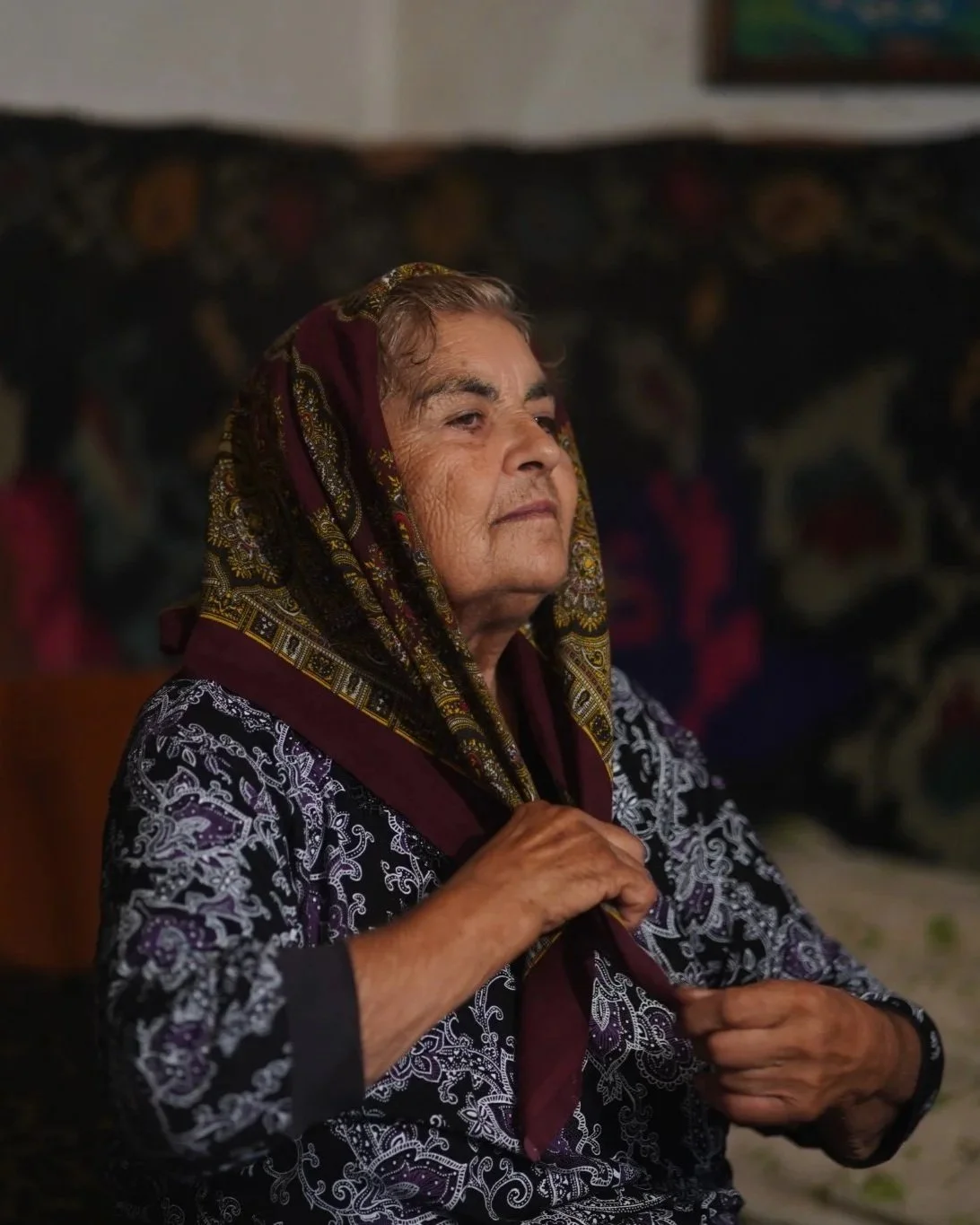
Ultimele femei cu chischineu
/ The last women with chischineu (headscarves)
There are many subjects that elderly women in rural communities enjoy talking about, but few spark as much enthusiasm and joy as the chischineu
Most of them have impressive collections, gathered in their youth and in more recent years, each piece carrying its own remarkable story and a whole network of meanings and codes that help us understand the social and cultural universe of village life in past decades. Beyond the headscarves themselves, the ways in which they are worn and wrapped speaks about the wearer’s social status or age. The women present them with delight, carefully explaining the story and particularities of each one, while these conversations reveal differences in class, cultural exchanges, and a range of customs and beliefs.
The project involves photographing headscarf collections, along with the women who have worn and continue to wear them, as well as conducting interviews focused on the types of headscarves, their meanings, and the broader cultural and social world surrounding this category of garments.
The word chischineu is a regional term of Hungarian origin (keszkenő), used in my homeland, Țara Silvaniei area, to refer to the headscarf, also known as batic, năframă, or basma in otehr regions of Romania, worn by peasant women to cover their heads throughout the year.
Made from materials such as cashmere, velvet, or wool, and in more recent decades from synthetic fabrics, the chischineu is an essential garment in the dress of elderly women in rural communities. Until a few decades ago, it was also worn by younger women and even by unmarried girls in other parts of the country. Growing up in a patriarchal society, for these women, the chischineu carries deep moral, social, and religious meanings.
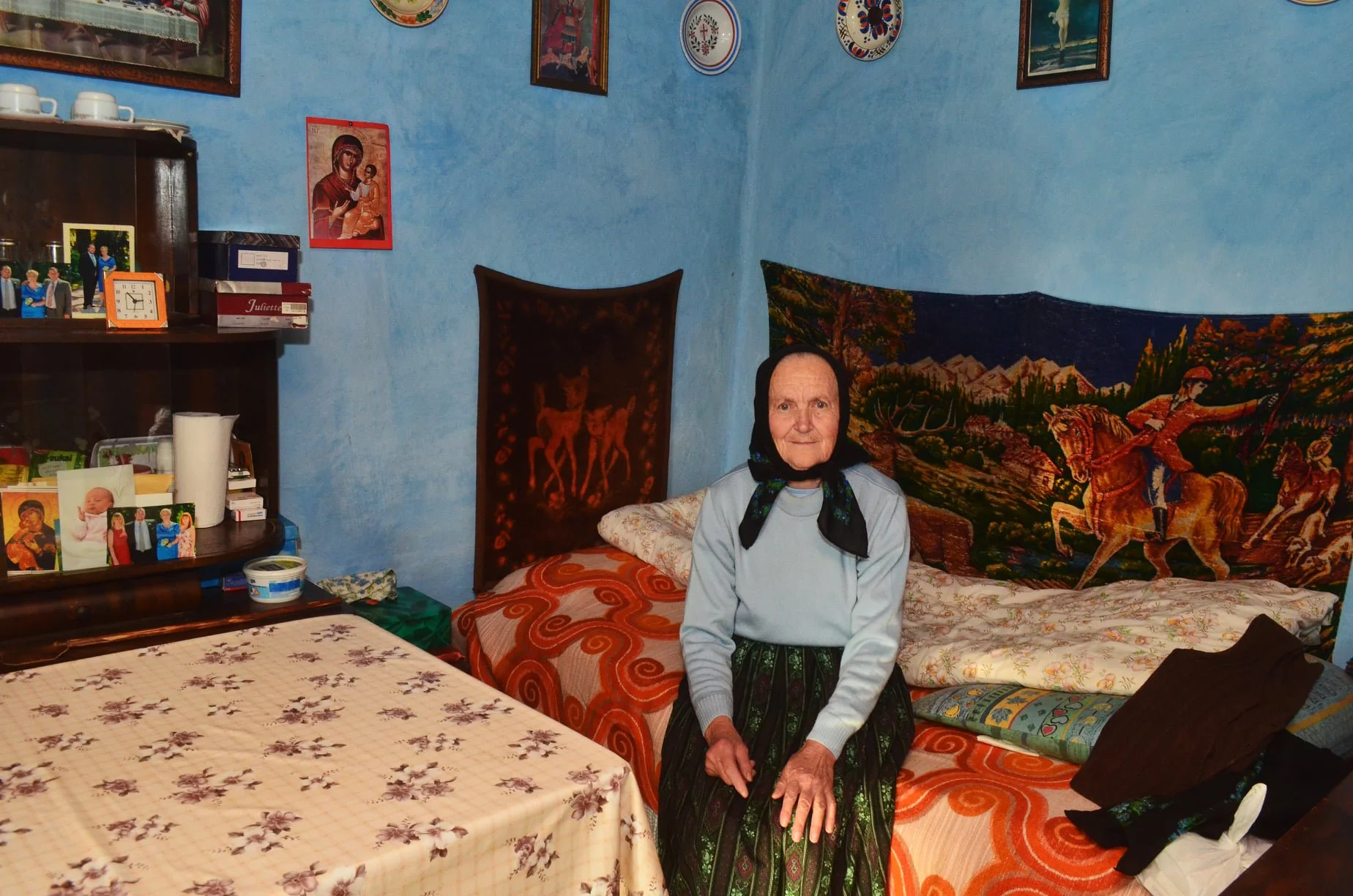
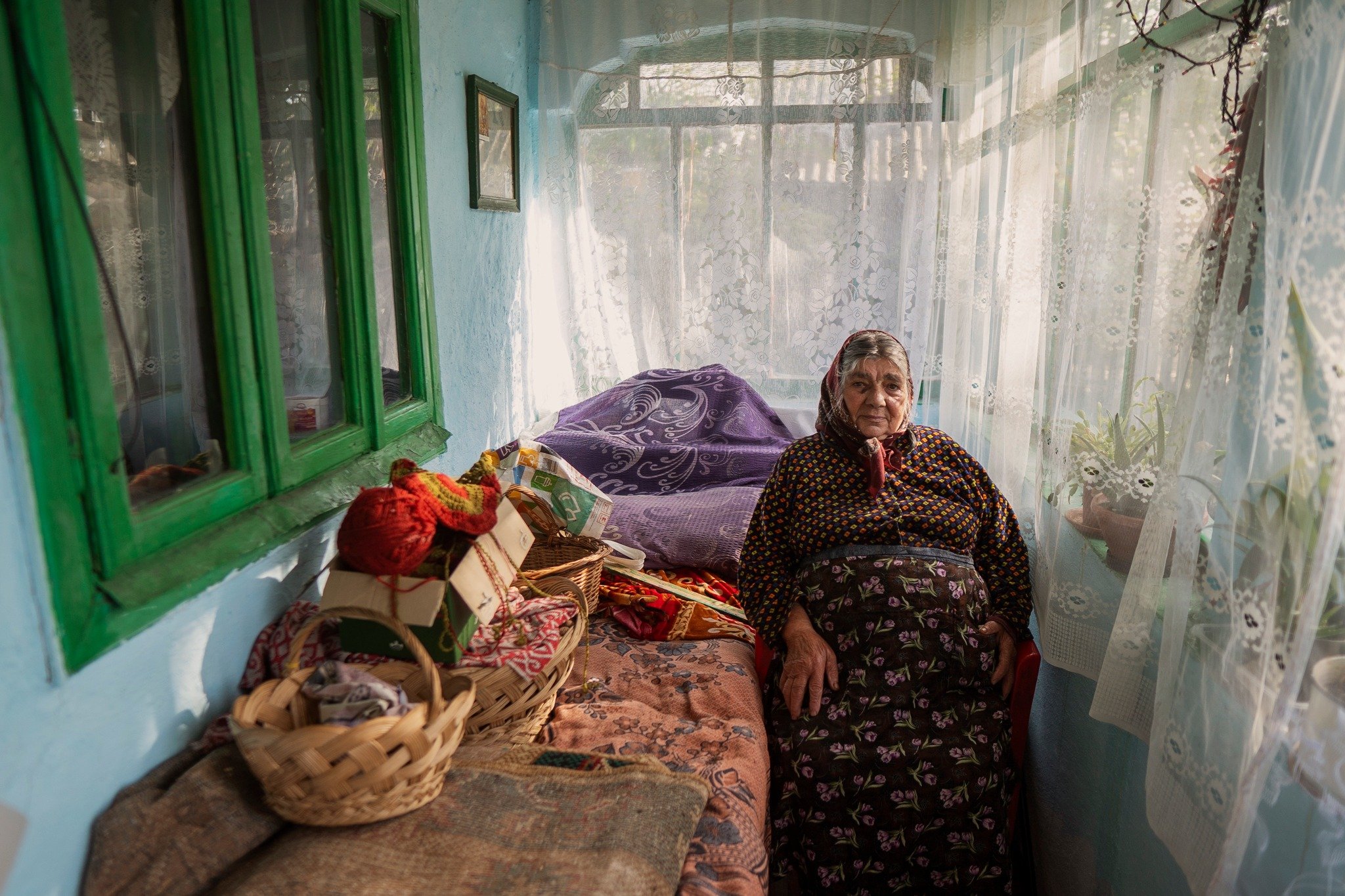
In the photographs:
Silvia Prislopan, Capu Codrului village, Suceava, 2022
Măriuța, Marin village, Sălaj, 2014
Dumitra, Talpa-Ogrăzile village, Teleorman, 2022
My grandmother, like many women her age, used to say that a beautiful girl has “peonies on her cheeks,” a sign of health and prosperity, as opposed to pale skin, considered the mark of someone frail or unwell.
In order to achieve this effect, girls would often pinch their cheeks or eat bread crusts, which they were told would also bring color to the face. Another method involved rubbing the cheeks with the leaves of a plant that caused stinging and reddening of the skin, a practice confirmed by women both from the Sălaj area and from Bistrița-Năsăud.
One woman, around 65 years old, from a village in Bistrița, told me that, following the advice of a coworker, she rubbed her face with the leaves of this plant, whose name she no longer remembers. Her skin quickly became severely irritated; she tried to soothe it with various creams, and when nothing worked, she eventually went to the hospital.
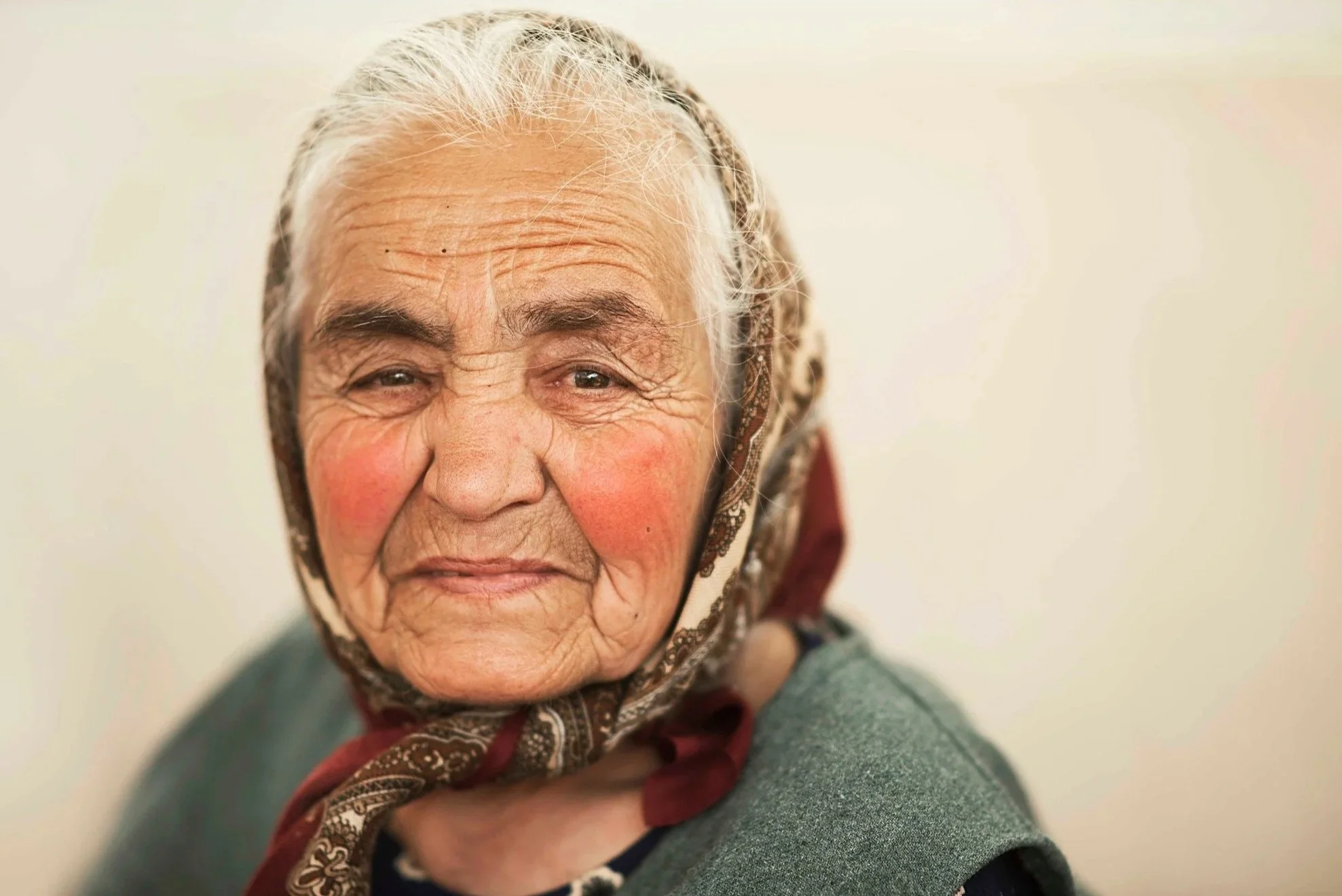
Mrs. Florita Șandor, from the village of Marin (Sălaj), told me: “We called them ruminele. It was a plant like a thread, with a spike and two leaves, and a thin root; we found it in the forest. I remember my neighbor rubbing it on her face, and she rubbed it on mine too. I was younger than her… and she said it makes you ‘rumini.’ (makes your cheeks blush). It stung a little. My father asked me what I had put on my face and sent me to wash it off. The more I washed, the redder it got. The redness didn’t go away, so he didn’t let me go to church.”
Maria also recalls this practice: “I was about 12 to 14 years old, hospitalized at the Children’s Hospital in Cransa, and one Sunday my grandmother came to visit me. She whispered so my mother wouldn’t hear, ‘Now you’ve grown up, and there are boys around here. Come, I’ll show you how to make your cheeks red.’ My mother didn’t know what we were talking about, but she realized when she saw us standing by the fence, because in that area, near the mushroom-shaped structure by the hospital, there was a lot of this plant growing. My grandmother naturally had red cheeks; she didn’t need ruminele.”
In the photograph: woman from Sici village, Sălaj County, 2019
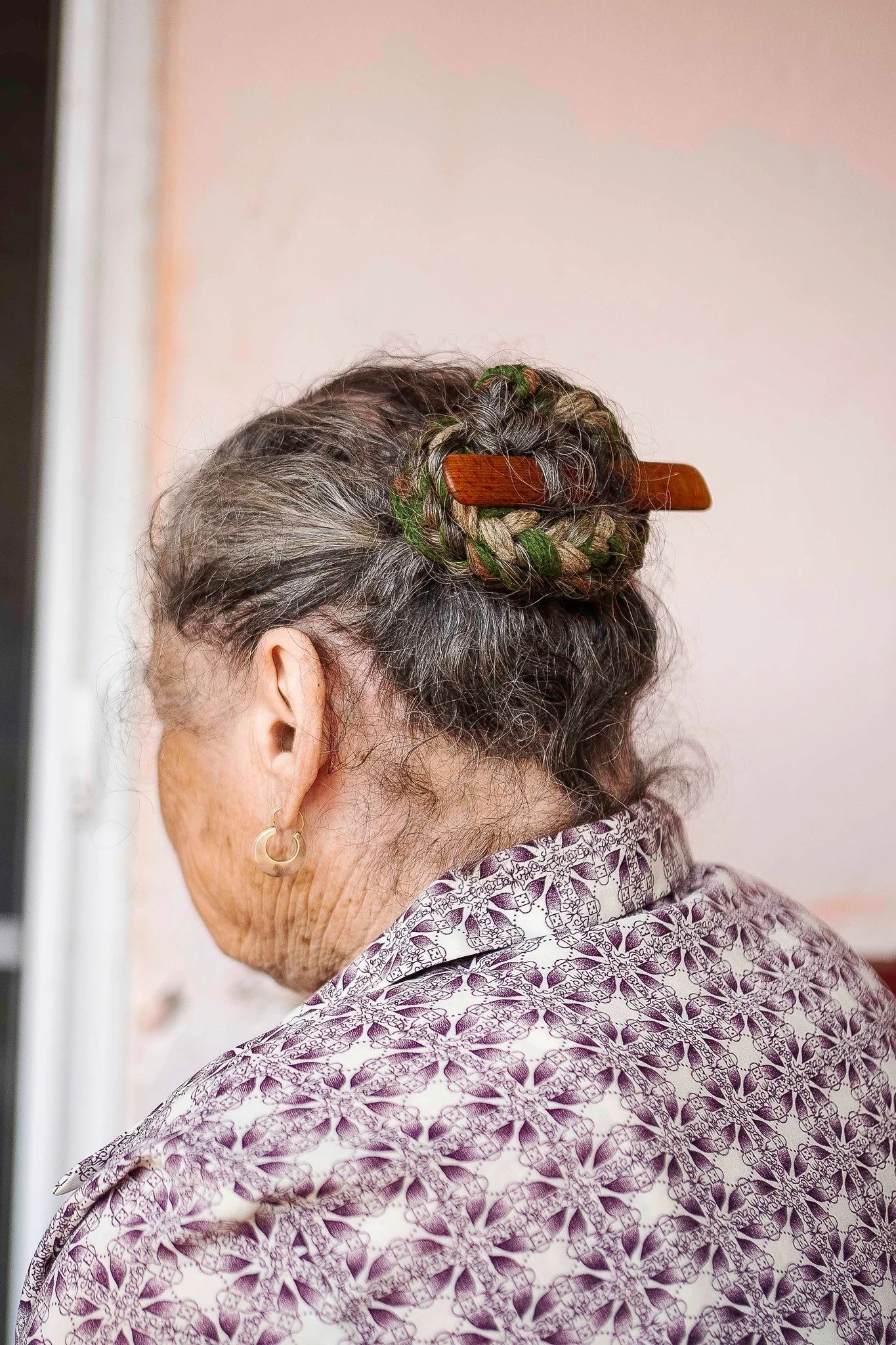
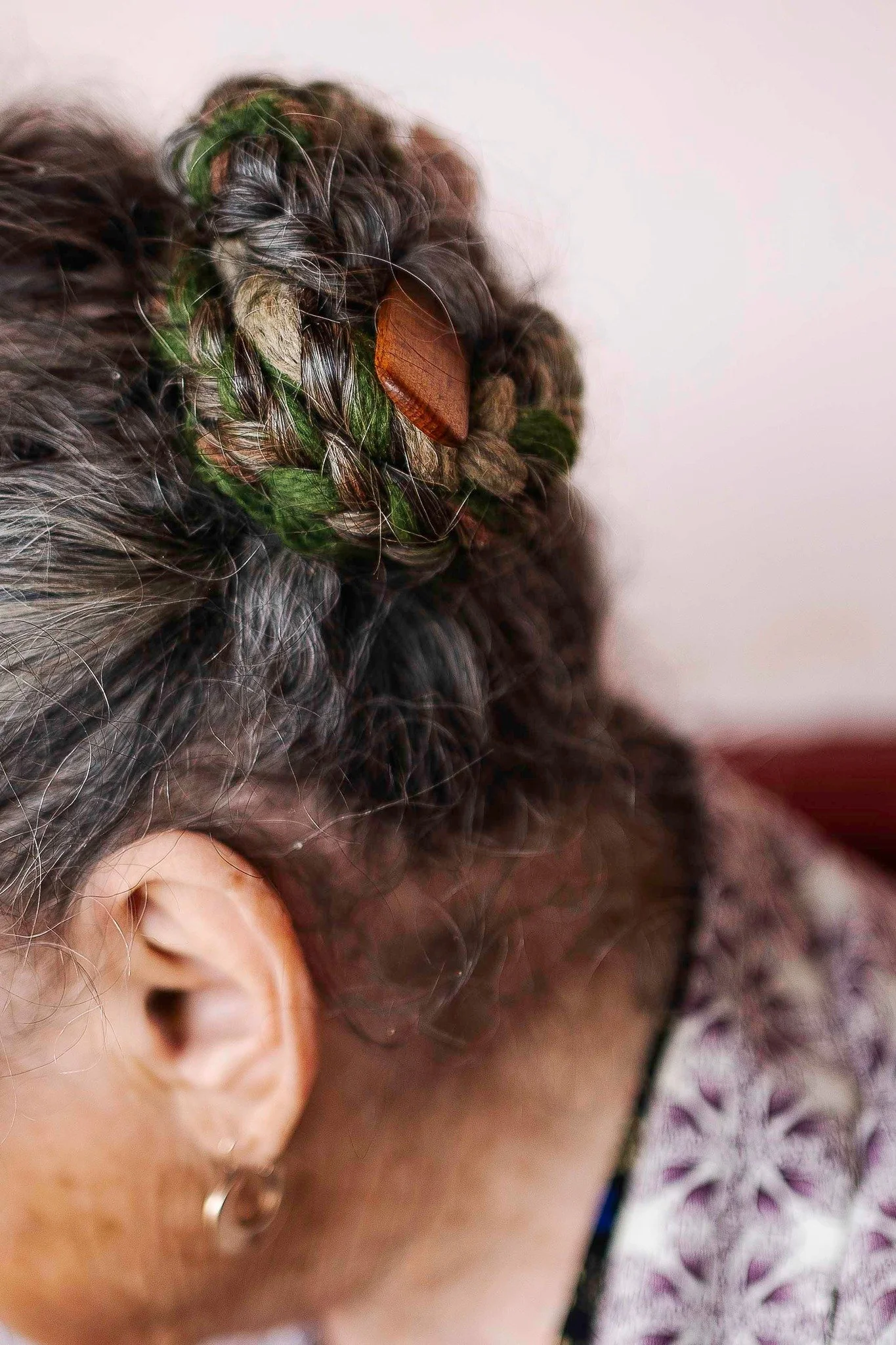
Underneath the headscarves worn by peasant women over the age of seventy, their hair is gathered into a bun. The one shown here is special, as the hair is braided with green wool, wrapped around a small wooden support. These slightly colorful braids are a quiet detail, known only to the woman who carries it.
It was summer when I was doing fieldwork in Posmuș village, (BN, Romania), and the heat had given Mrs. A. a headache, so she removed her headscarf and sat in the shade for a few minutes. After we spent some time talking, she agreed to let me photograph her hair.
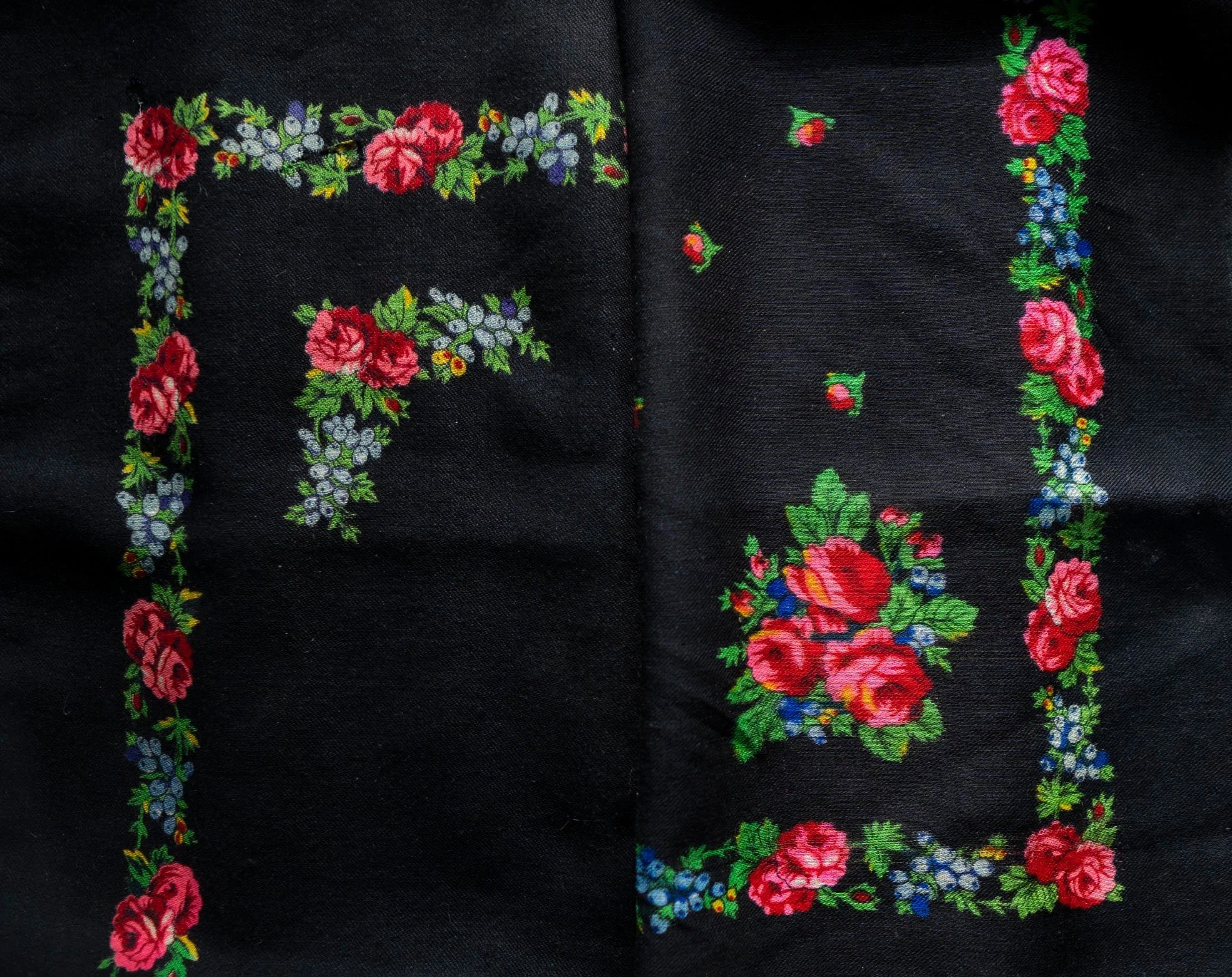
With some of the money she earned from seasonal agricultural work in Jimbolia in the ‘70s, Ileana bought these two headscarves.
The pattern on the scarf on the left is called “with a flower (ro. pană) in the corner,” while the one on the right is known as “with flowers (ro. pene) on the head”, small flowers spread across most of the fabric, covering the head.
- Marin village, region of Țara Silvaniei, Romania
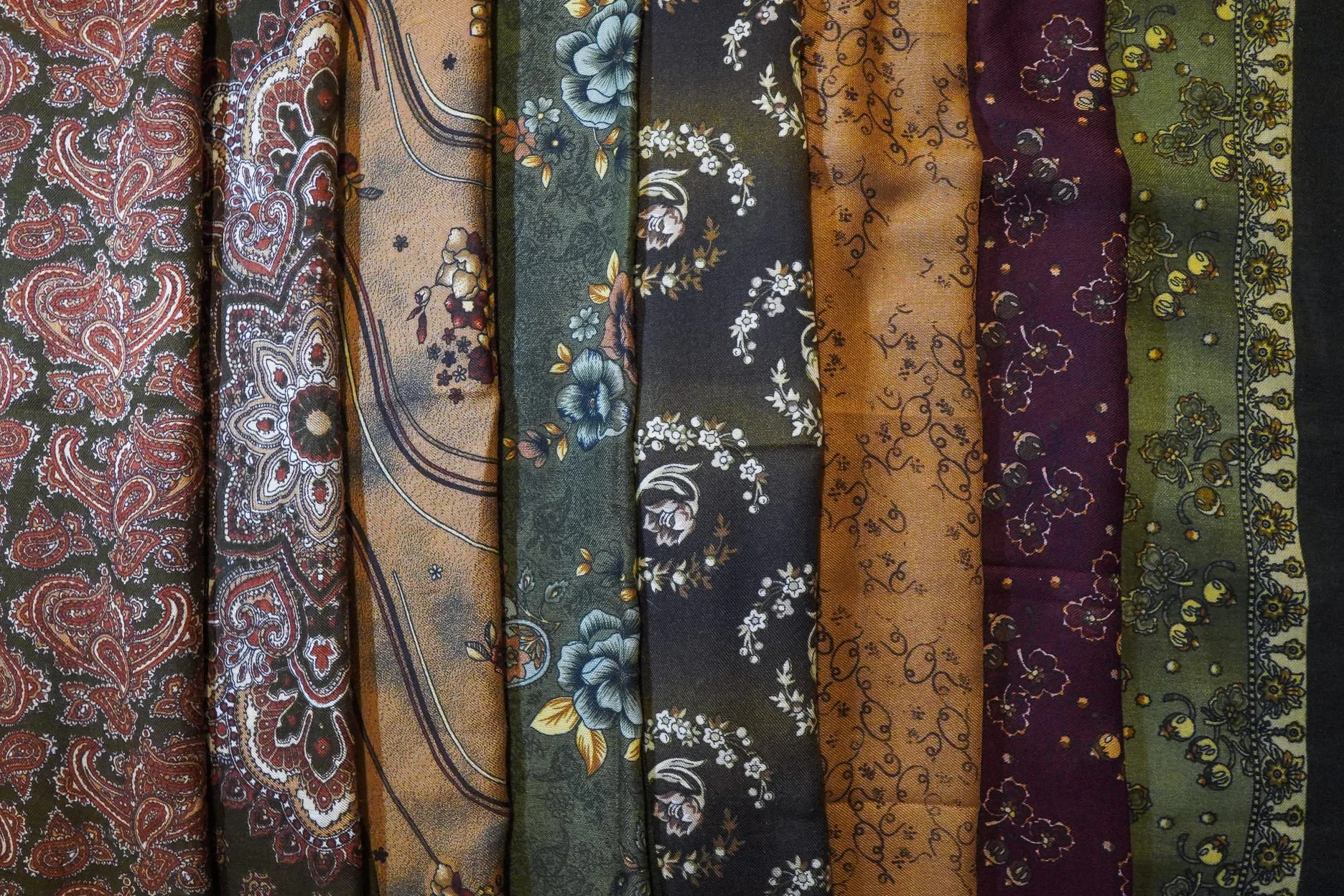
Maria Lazăr (75yo) has always preferred more neutral or darker colors. Since the age of fifty, she has given up brightly colored headscarves or those with red flowers, choosing instead ones in earth tones, which she matches with her dress or blouse depending on color or pattern. Her favorites are green and brown shades.
The photograph shows only a very small part of Maria’s collection of headscarves. Some are reserved for festive occasions, while others were once worn for celebrations and later became “everyday” or “work” scarves.
Maria Lazăr, Marin village, Sălaj, 2022
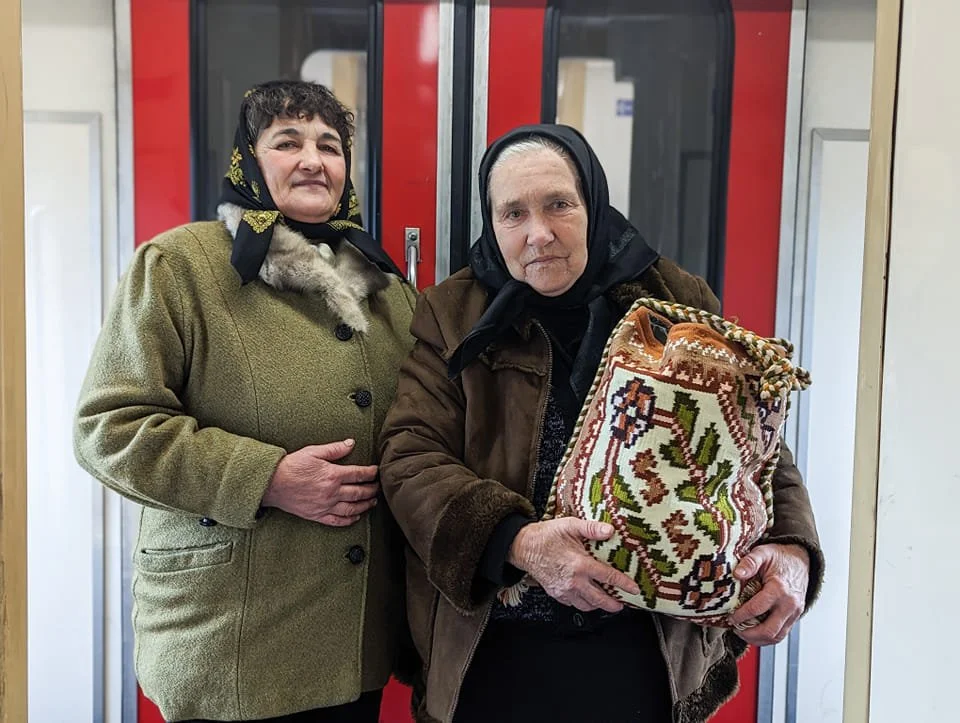
“I’ve worn a headscarf since I was a child,” Paraschiva tells me (75 years old, on the right of the photo).
It was Monday morning in February 2022, when I took the 5h train from Cluj to Câmpulung Moldovenesc. On the montains of Bistrița I meet Violeta and Paraschiva, who are heading home to Măgura Ilvei.
We start talking, and I learn from Violeta (61 years old, left of the photo) that she studied textiles in Cluj and used to cover her head not only in the village, but even when she went to the city. She tells me she wears it because “that’s how I was born. I’m a woman from the countryside,” but also for practical reasons: in the summer, when it’s hot, she wears a hat, and when the wind blows, she ties a headscarf underneath. She never leaves her house showing her uncovered head.
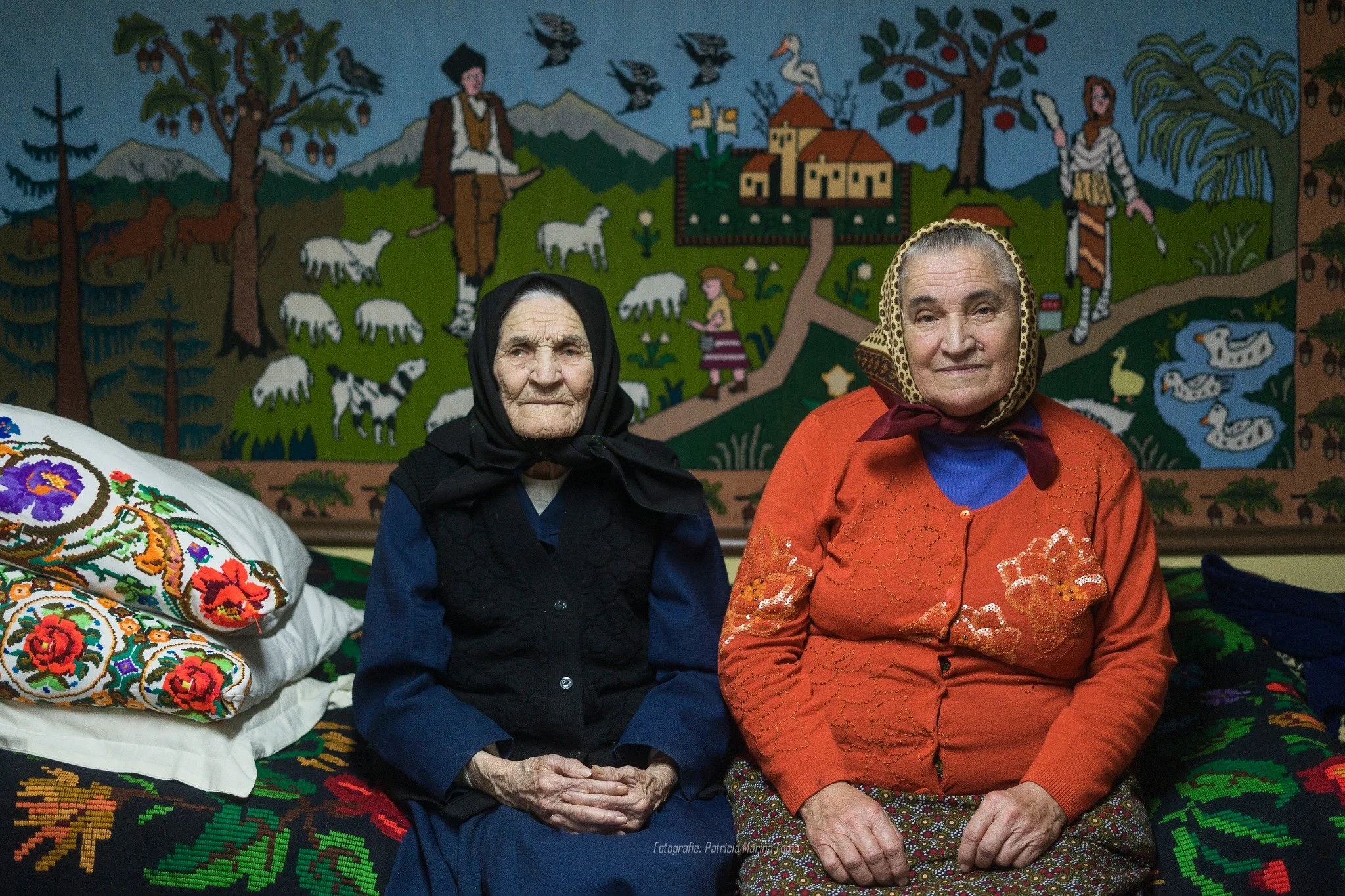
On February 25, 2023, Maria Buda turned 103 years old.
She was born in 1920 in the village of Ungureni (today part of Maramureș County), into a family of four children. In her youth, like many people from the area, she moved to Cepari (Bistrița Năsăud), where she still lived with one of her daughters until her last days.
Both women are wearing headscarves appropriate to their age, carefully matched with the rest of their clothing. Maria wears a navy-blue ensemble, a buttoned blouse and dress, paired with a black vest and a black headscarf decorated with small blue flowers along the edges. Her daughter, Ioana, has chosen a cream-and-brown headscarf matching the warm tones (an orange jersey top with sequins) and the patterns of her dress (small flowers in dark green, deep red, and brown), creating a contrast with the blue of the blouse partially visible at the neckline.
Photographed in January 2021, Cepari village, Bistrița-Năsăud
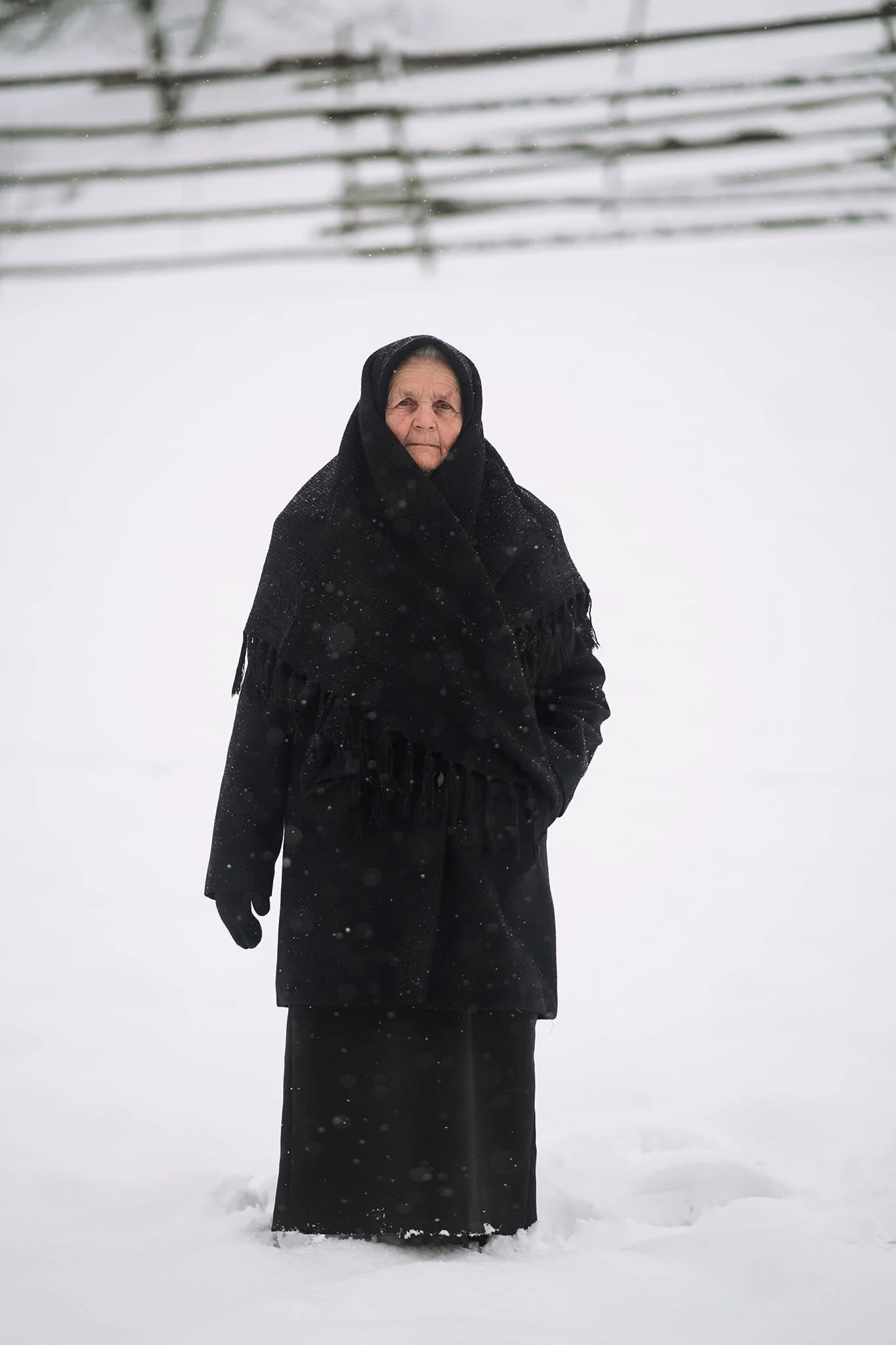
On the first snowy day of the year, Nastastia Filip (84) wrapped herself in her broboadă, the winter headscarf, as it is called here in the village, which she has owned for 65 years. She also has another one, shorter, about the size of a regular headscarf, in a dark brown shade, but this larger one is her favorite. She has taken such good care of it that it still looks impeccable: it hasn’t torn, faded, or been damaged by moths.
Bertă, casâncă, broboadă, bertută, bertută, năframă de iarnă or năframă mare are just some of the names used in different parts of the country (Suceava, Botoșani, Galați, Arad, Bistrița-Năsăud, Sălaj, Alba) for the large woolen shawl worn by women over the head, back, and shoulders on freezing days, protecting them from wind and snow.
Such pieces were once found in markets or sold by traveling textile merchants who passed through villages. They were knitted with various monochrome, floral patterns along the lower edge, woven into geometric forms, and most often finished with tassels or fringes. They were wrapped tightly along the cheeks, crossed under the chin, and either held by the corners in a pocket (see in the picture) or tied at the back, if their length allowed. Their purpose was to protect against frost and snow - weather conditions that are no longer as harsh in our regions as they once were, due to the climate changes.
Today, this piece is worn regularly mainly by mature or elderly women in villages. Younger women tend to choose hats, scarves, padded jackets, coats with collars, or even ponchos.
In the photograph: Nastasia Filip, 84 years old, Telciu village, Bistrița-Năsăud, 2022
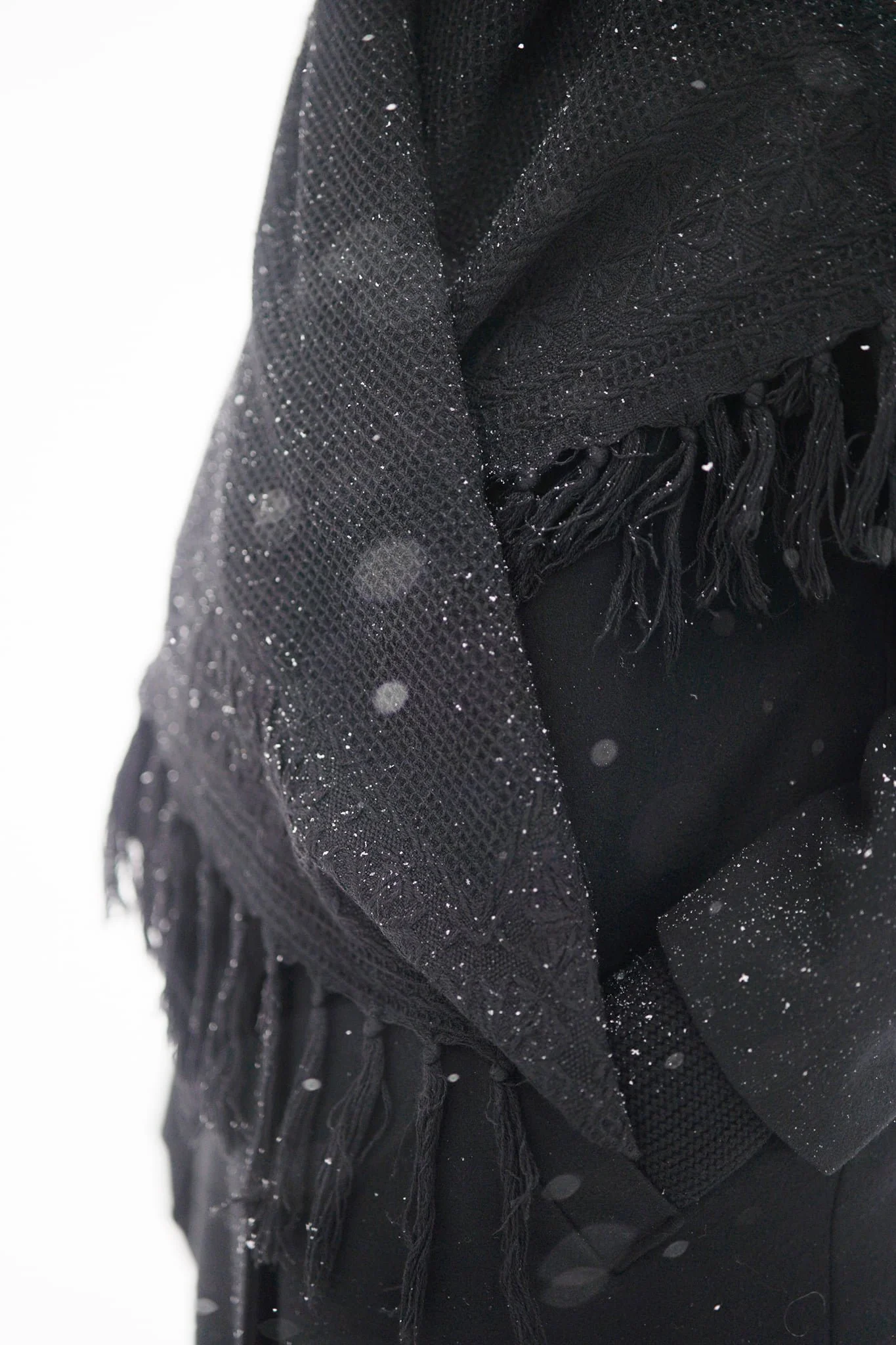
“I was a child in the 60s, when large berte were worn around the head and covered the body down to the knees. When there were blizzards, my mother wrapped herself in such a bertă to protect herself from the cold and snow.”
says Mariana Ilica, who grew up in Botoșani
“Anyone who owned one of these broboade held onto it tightly because they were hard to find and expensive. They were soft and warm.” - Viorica Duca
“My great-grandmother’s broboadă now wraps my little daughter.
My great-grandmother had bought two, but soon after, my great-grandfather went blind, and she wore nothing but black from then on. The brown broboadă remained unused, still with its paper label on it. It says 1977. When I am wrapping Irina in it, I feel like our ancestors are watching over her from above.” says Petruța Dumitrescu, Ialomița
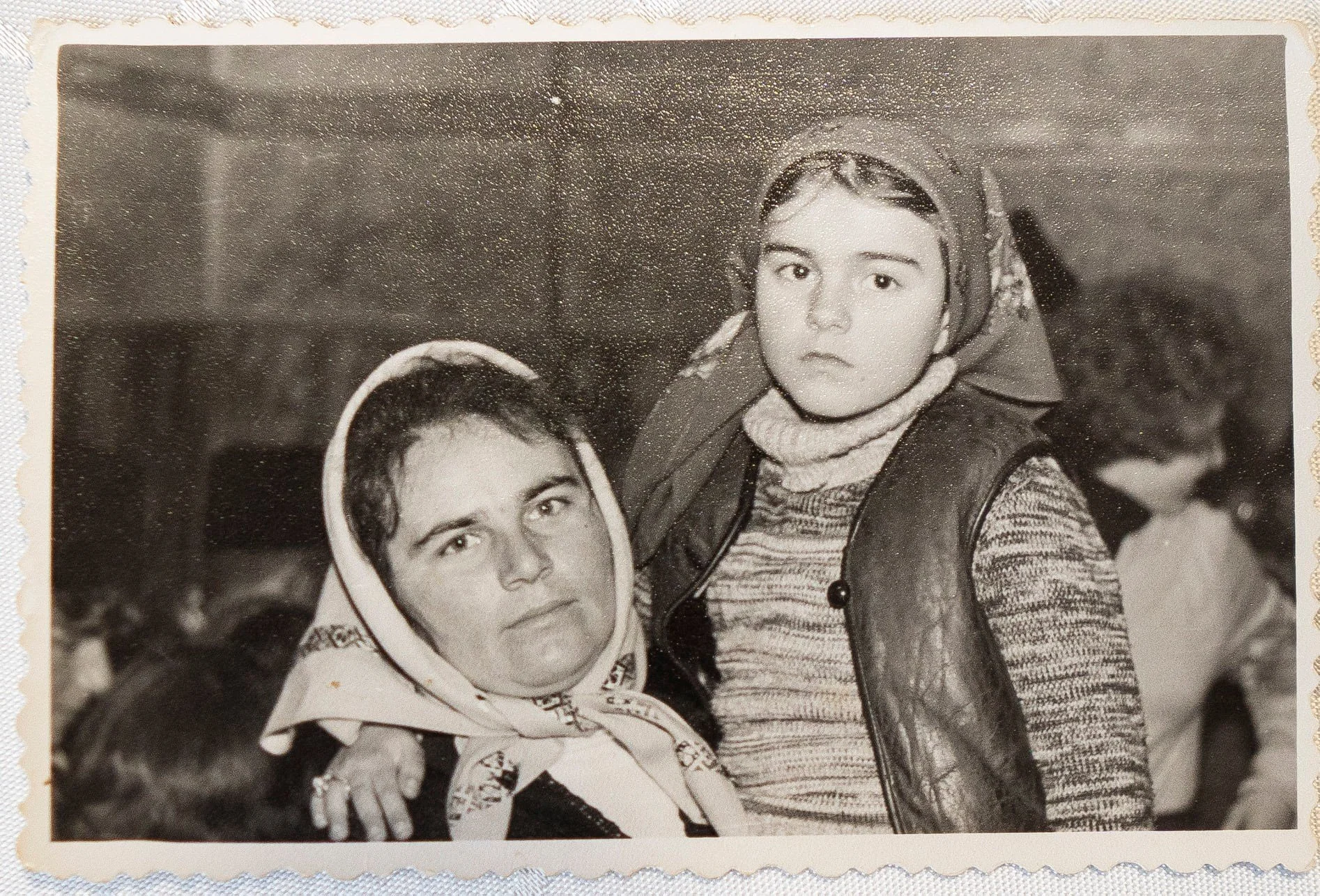
Mom and daughter wearing năframă.
Anuca and Sîiuca, aprox 1975, Telciu village, Bistrița-Năsăud
Family archive picture
Ana is 29 years old, and she stil has her baptism headscarf, which her mother received from her mother-in-law. (red scarf, lower)
“Back then, babies weren’t taken to baptism dressed the way they are now. They were swaddled, as we used to say. They were wrapped in a small quilt, and the headscarf was placed over their face,” Anuca, Ana’s maternal grandmother, explains to me.
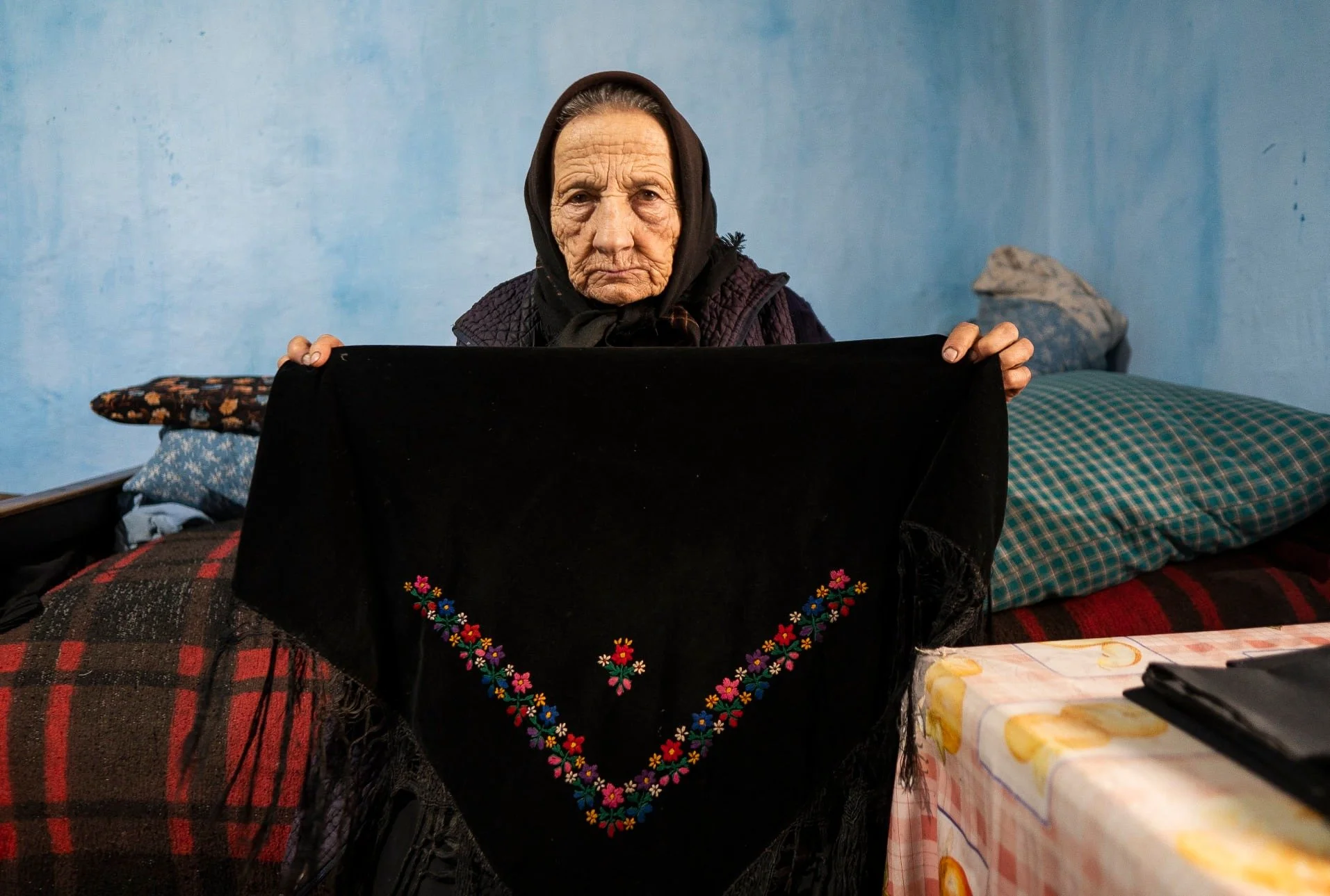
Peștean Floare (93 yo) presenting the chischineu she received as a wedding gift from her godmother.
Marin village, Sălaj, 2022
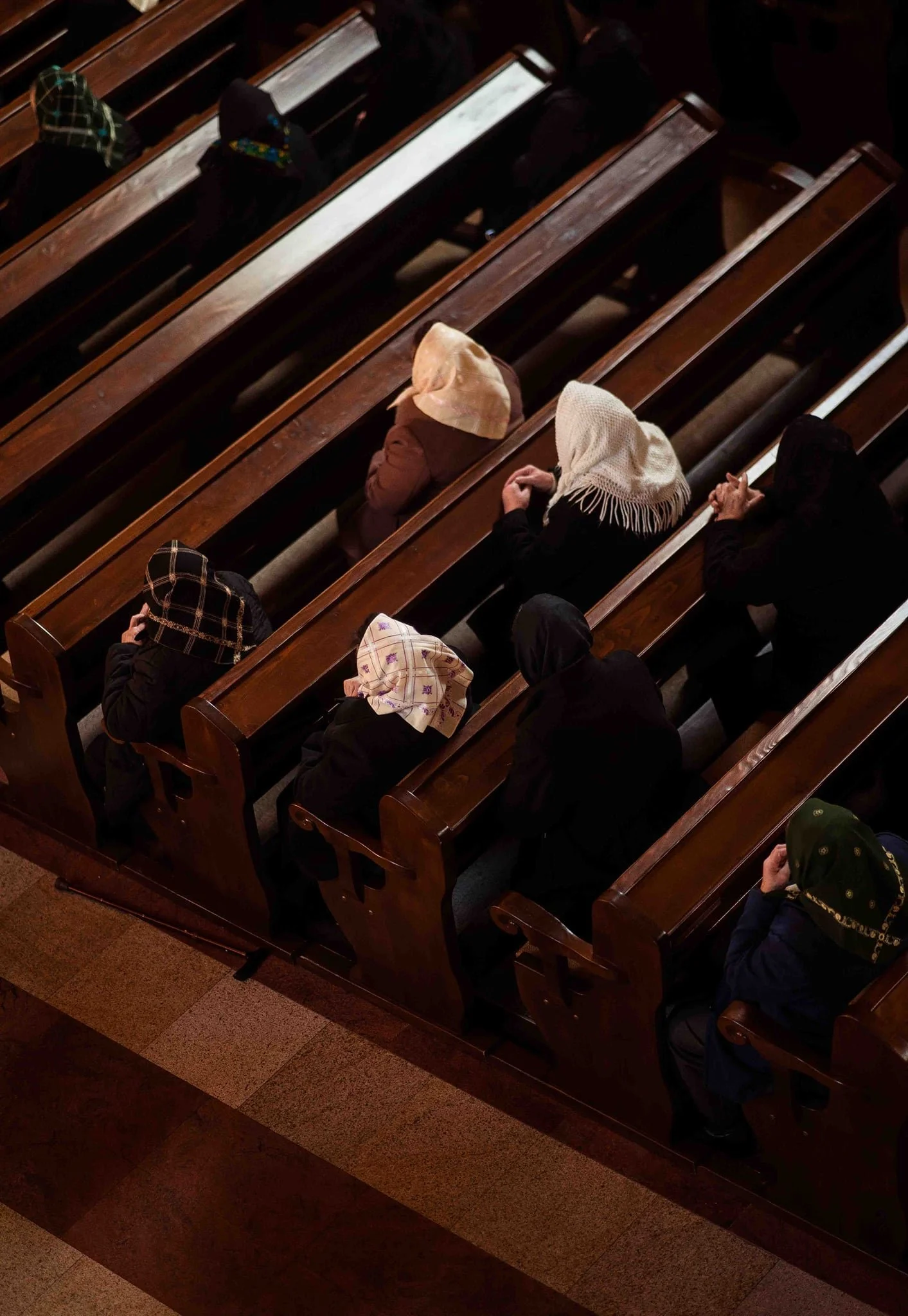
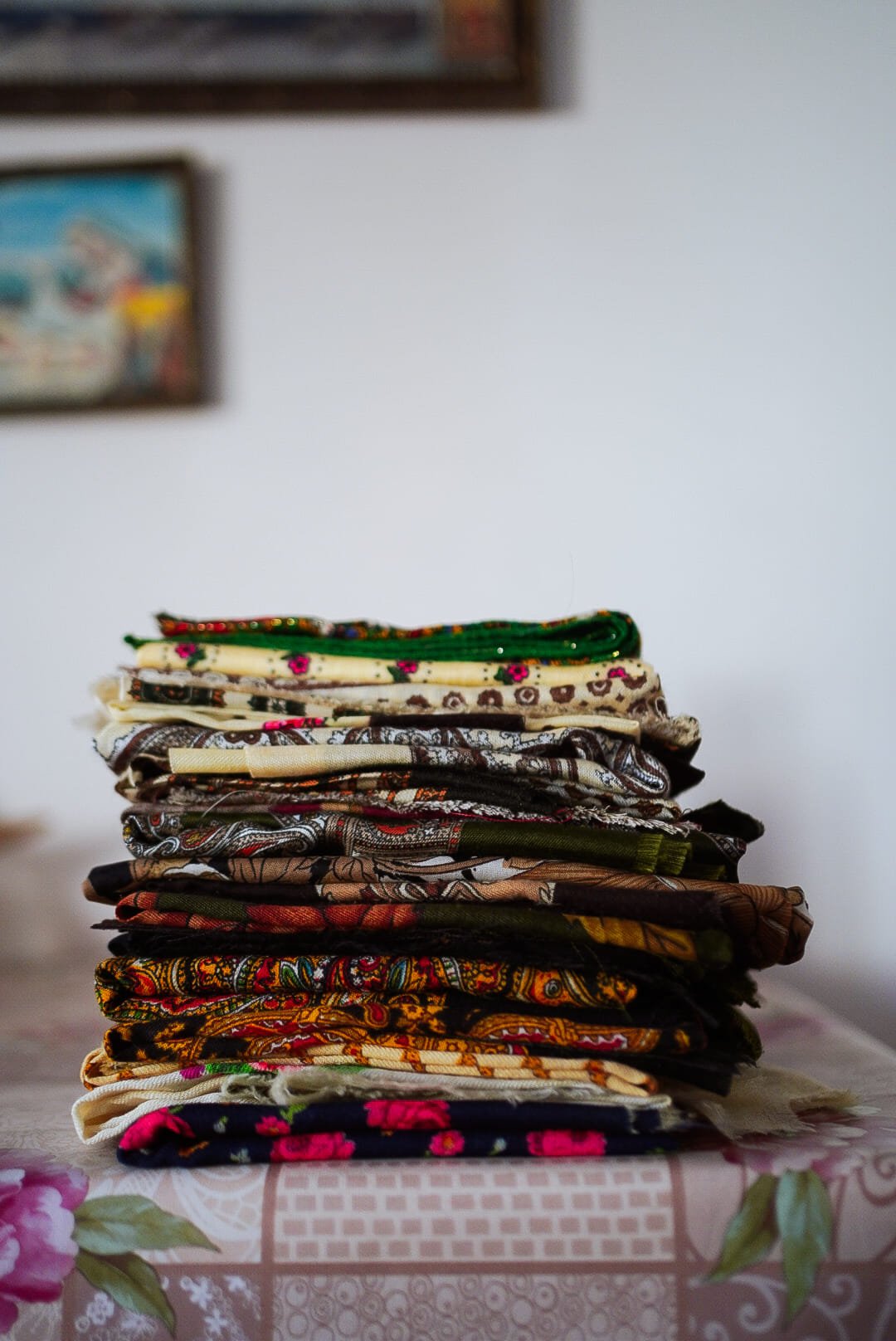
Women wearing năframe in the curch
Telciu village, Bistrița Năsăud, 2022
Elisabeta’s tulpane
Paltinoasa village, Suceava 2024