Fragment din jurnalul de teren - satul Posmuș, Bistrița-Năsăud, Romania 2023
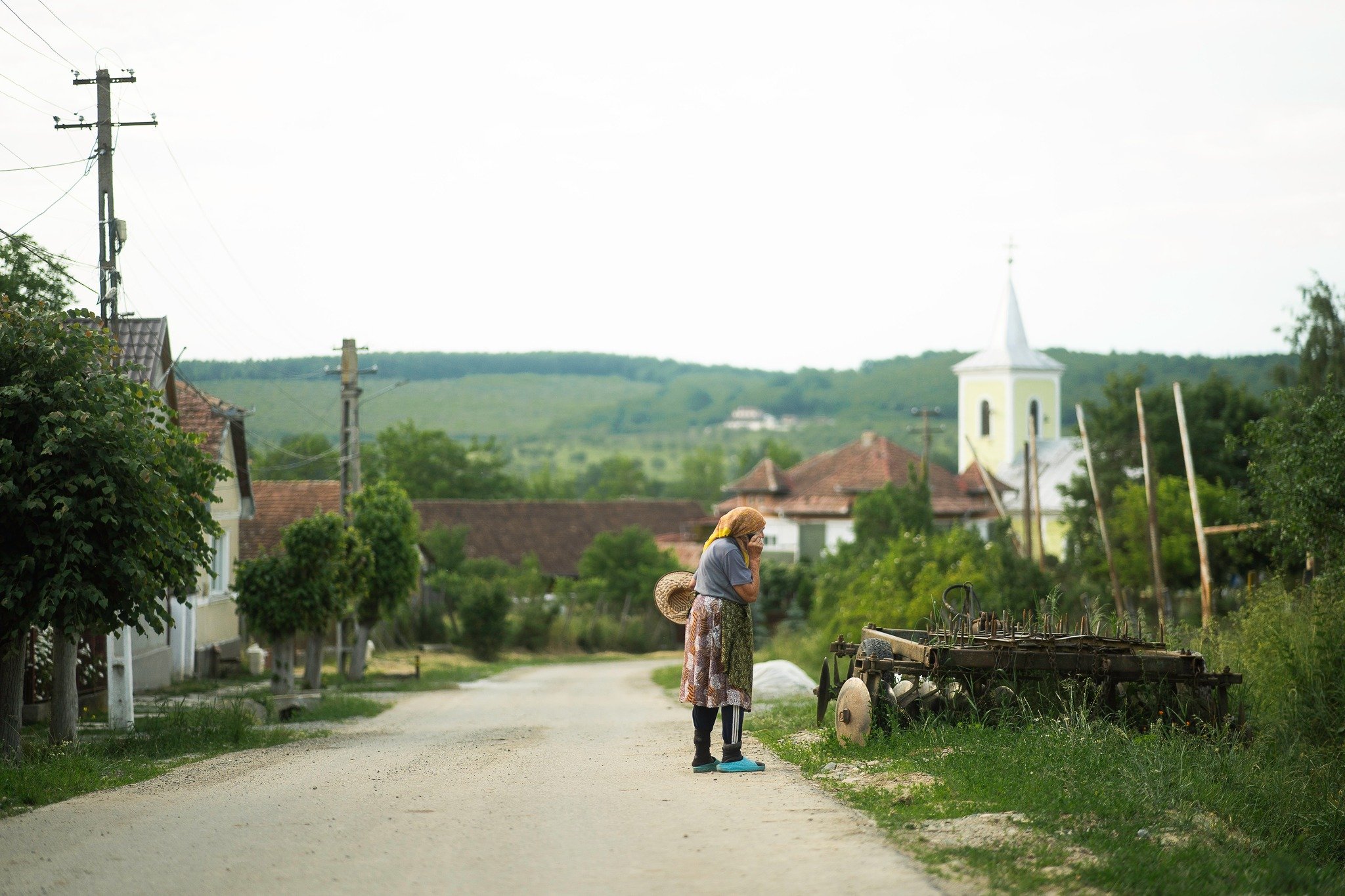
Am ajuns la Posmuş în sezonul în care în cea mai mare parte a zilei femeile poartă pălăria de paie peste năframă şi le găseşti prin grădini sau câmpuri. Când nu lucreză pământul îşi împletesc părul cărunt într-un coc peste care pun un burete făcut special pentru a oferi volum, şi se învelesc cu năframă din caşmir cusută cu flori de mătase. Felul în care îşi gătesc capul femeile ţărănci din partea aceasta a Bistriţei le face să pară doamne de la oraş.
Era o zi de lucru, pe la mijlocul rezidenţei mele, când căutam să fotografiez oamenii la muncile câmpului. Coborând dinspre Castel, în centrul satului trec o vale mică pe o punte îngustă improvizată şi fac stânga în sus pe lângă fântână, pe dealul unde se află şi cimitirul. Urcând, mă gândesc la povestea femeii cu care am stat de vorbă cu o zi înainte, care a îmbătrânit alături de soţul său, pe care apoi l-a văzut murind. Am stat împreună câteva ore, m-a servit cu prăjitură, ne-am uitat la fotografii vechi de familie, am râs şi ne-am emoţionat - ea de la amintiri, iar eu de la poveştile auzite. (…)
Ştiam drumul după o hartă orientativă pe care o aveam în minte şi indicaţiile câtorva săteni. Ajung în dreptul unei porţi vopsite cu lunar şi mă întâmpină o doamnă zâmbitoare care bătea pari la roşii în grădină. Traversez curtea pe lângă casă şi cuptorul în care găteşte săptămânal, şi îmi deschide poarta de fier pentru a ajunge în ograda vecinilor ei care adunau fân. Trecuseră ani de când nu am mai participat la o clacă de lucru şi eram curioasă ce se schimbase, dacă se schimbase ceva, şi ce a rămas la fel. Sunt două femei şi doi bărbaţi, dintre care un cuplu la vreo 50 de ani şi o femeie mai în vârstă, înaltă şi cu multă energie. Femeia mai tânără îşi poartă şi ea capul acoperit de o pălărie din paie cu o fundă roz şi face glume încât munca şi căldura verii nu se mai simt. Au făcut două pauze scurte în care au băut apă, şi-au şters frunţile şi au continuat. Sarcinile sunt informal împărţie în două categorii: ridicarea căpiţei de către bărbaţi şi greblatul fânului pe zone mai mari, de către femei. Tot la câteva minute, una dintre femei înfinge furca într-un bot de fân, o ridică pe spate şi coboară înspre căpiţă. În urma ei rămâne un nor de stroh (reg. fân mărunt) care mi se lipeşte de pielea transpirată. Livada e în spatele casei, aşa că îndată ce au terminat, au urcat înspre curte cu greblele pe spate, împrăştiindu-se apoi înspre alte munci, pentru că abia ce era trecut de amiază. (…)
În drumul meu spre casă trec pe lângă cimitirul unde, în prima mea zi de teren am participat la o înmormântare, al doilea loc în care am văzut localnicii împreună. În dimineaţa aceea mi-am început ziua la fel ca o mare parte dintre săteni - cu Liturghia urmată de înmormântarea unui bărbat care a sfârşit tragic, şi despre care oamenii au vorbit cu regret toată săptămâna. Uitându-mă acum la fotografiile din biserică pot să pun o poveste peste feţele necunoscute pe care le-am fotografiat atunci şi descopăr câte o cunoştinţă nouă cu fiecare cadru. În faţă era bunicul Danei, care am auzit că a murit în urmă cu câteva luni, apoi e familia Suciu, cel mai în vârstă cuplu din sat care ajung să fie vecinii mei de peste drum în scurta mea şedere, din spate mă priveşte curios femeia împreună cu al cărei soţ voi alege fasole în faţa casei lor, gândindu-mă la atenţia pe care şi-o oferă reciproc. Doar în altar era singura faţă cunoscută la momentul acela, preotul, cu care am copilărit în Sălaj.
Zilele mele petrecute la Posmuş s-au împărţit între momente în care am fotografiat superbele picturi interioare ale caselor şi cele în care am participat la munci agricole şi discuţii cu vârstnicii despre viaţă, dragoste, muncă, nepoţi şi moarte.
Aceste fotografii sunt jurnalul meu vizual din tot acest timp petrecut în sat.
Fragment from my residency journal - Posmuș village, Bistrița-Năsăud, Romania 2023
I arrived in Posmuş in the season when women are wearing straw hats over their headscarves, and spend most of their days in gardens or out in the fields. On special days when they don’t have to work the land, they braid their greying hair with colorful wool, into a bun, over which they place a specially made padding to add volume, and cover it with a cashmere headscarf embroidered with silk flowers.
It was a workday, around the middle of my residency, when I went for my regular walk around the village to photograph people doing their summer activities. Walking down from the Castle, in the center of the village I cross a small valley on a narrow, improvised footbridge and turn left, uphill, past the well, toward the hill where the cemetery is located. As I walk up, I think about the story of the woman I had spoken with the day before, who grew old alongside her husband and spent their youth together, but died in her arms shortly after they retired. We spent several hours together; she served me cake, we looked through old family photographs, we laughed and shared memories - two women from generations 40 years apart.
I know the way around the village from a rough mental map and from the directions given by a few villagers. I stop in front of a gate painted with lunar white, where I am greeted by a smiling woman who was tying tomato plants in her garden. I cross the yard past the house and the oven she uses weekly, and she opens the iron gate so I can reach her neighbors’ yard, where they were gathering hay. It had been years since I had taken part in a collective work gathering, and I was curious to see what had changed, if it did, and what had remained the same. On the orchard around piles of hay, there are two women and two men: a couple in their fifties and an older woman, tall and full of energy. The younger woman also keeps her head covered, wearing a straw hat with a pink ribbon on, making her very elegant for a sweaty day in the fields. She’s constantly joking, making the work and the summer heat easier to bear. They take two short breaks to drink water, wipe their foreheads, and then continue. Tasks are informally divided into two categories: stacking the hay by the men and raking it over larger areas by the women. Every few minutes, one of the women plunges her pitchfork into a bundle of hay, lifts it onto her back, and walks down toward the main haystack. Behind her, a cloud of chaff lingers, sticking to my sweaty, burned skin. The orchard is behind the house, so as soon as they finish, they head up toward the cortyard with rakes over their shoulders, then scatter to other tasks, as it was only just past midday. (…)
On my way home, I am passing by the cemetery where, on my first day of fieldwork, I attended a funeral. It was the second place where I saw locals gathered together. That morning, I had begun my day like many villagers do: with the Liturgy, followed by the funeral of a man who had died tragically and whom people spoke about with regret throughout the whole week, during all my interviews. Looking now at the photographs from the church, I am able to place stories onto the unfamiliar faces I photographed back then, discovering a new acquaintance in each frame. In front of the altar is Dana’s grandfather, whom I later heard had passed away a few months ago; to the right is the Suciu family, the oldest couple in the village, who became my neighbors across the road during my short stay. All the way to the back, a woman looks at me curiously, the same woman whose husband I would later help pick beans with in front of their house, thinking about the care and love they show one another. In the altar stood the only face I recognized at the time: the priest, with whom I grew up in my village and went to kindergarten together.
My days in Posmuş were divided between moments spent photographing the beautiful interior wall paintings of houses and moments of agricultural labor and conversations with elderly villagers about life, love, work, grandchildren, and death.
These images represent my diary through the weeks I’ve spent here.




Castel Viu - Artă și Comunitate la Posmuș
Castel Viu - Artă și Comunitate la Posmuș- proiect derulat de Petrus Italus Trust - Alianța Pentru Patrimoniul Bistrițean, finanțat în cadrul Investiției I5, C11 din Planul Național de Redresare și Reziliență. Conținutul acestui material nu reprezintă în mod obligatoriu poziția oficială a Uniunii Europene sau a Guvernului României. PNRR: FONDURI PENTRU ROMÂNIA MODERNĂ ȘI REFORMATĂ!